

Gomoti Plains Wildlife Stories February 2026
Weather Report
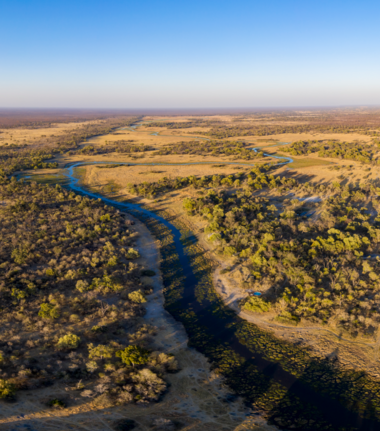
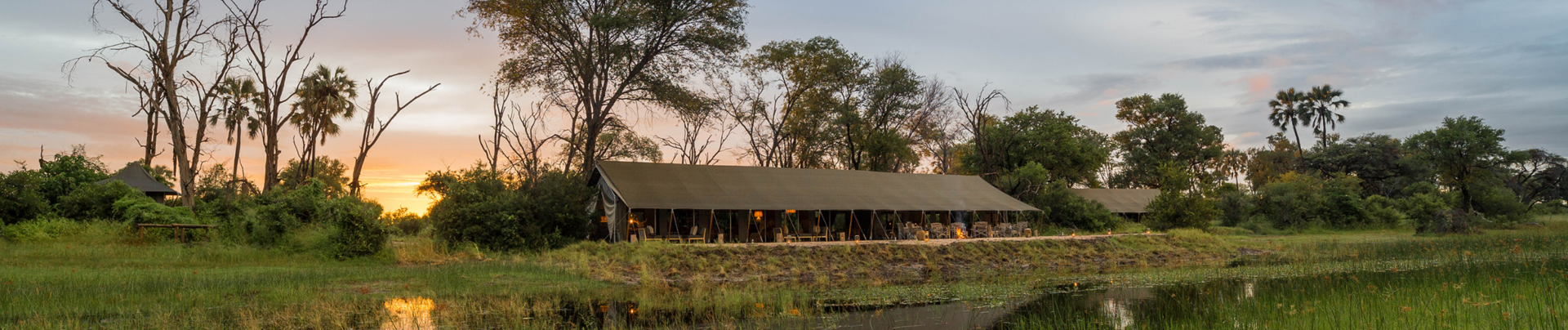
The lush savannah around Gomoti Plains Camp had a welcome abundance of rainfall this wet season, and February was no exception. 150mm of rain had fallen during the month, resulting in high humidity when combined with the average midday temperature of 34 degrees Celsius. Despite the heat, the vegetation and animal life in the Okavango Delta revelled in the wealth of water sources and food to pick from.
Secure The Kill
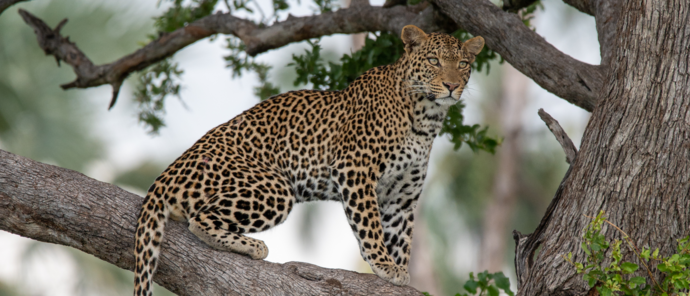
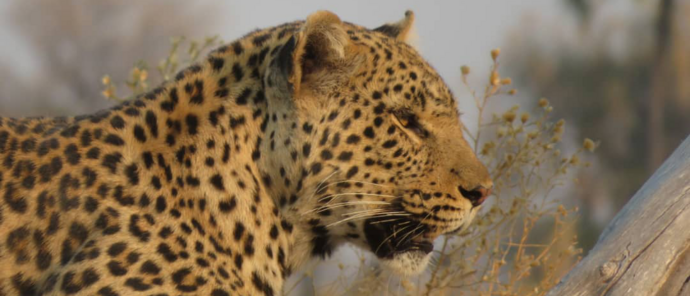
Not far from Skimmer Pan, we encountered a beautiful female leopard. It had recently killed an impala and was hoisting it up a tree. Leopards are solitary hunters, so to make sure bigger predators like lions and hyenas do not repeatedly steal their kills, they use their nimble and powerful bodies to drag their kills to high places where the heavier scavengers can’t reach.
This sighting is uncommon, especially around the Skimmer Pan area, so imagine our surprise and delight when we spotted the stunning female leopard.
Family Reunion
After we spotted the female leopard and her impala kill, we decided to see if any scavengers had sniffed out her kill the next day. We did not see any other predator species, but what we did see was so much more heartwarming.
We saw the same female leopard as the day before, but this time with another male leopard and their adorable cub! The previous day’s excitement was nothing compared to the feeling we had from this sighting.
Big Cat Frenzy
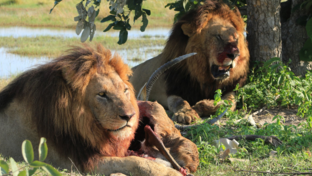
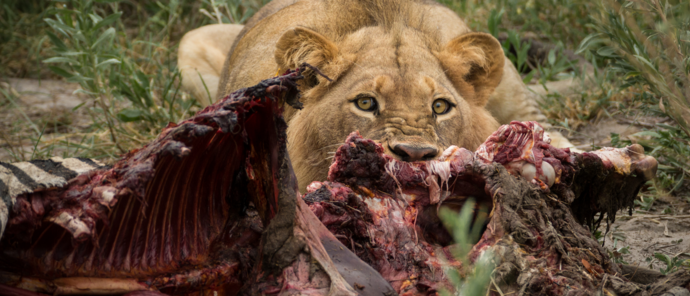
We were on a roll in mid-February. The day started with a sighting of an incredible lone female cheetah when we drove to Wild Dog Pan. We observed it for some time before it disappeared into some bushes. After we moved on, we found the Survivor lion pride, there were eight, including their cubs, on a zebra kill. We stayed for a while to watch the pride feed on the kill.
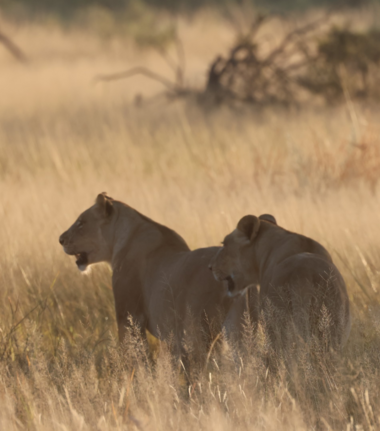
When we got back to camp, we spotted yet another big cat. This time it was a pair of leopards, moving purposefully in the dying light of the setting evening sun.
Ground Hornbill
There is nothing better than showing well-travelled guests something they have never come across before. On this occasion, we introduced our guests to the southern ground hornbill (Bucorvus leadbeateri). This species of hornbill is only found in Africa and is the largest of its species in the world.
Tragically, this species is classified as vulnerable, primarily due to habitat loss from agricultural expansion. Nevertheless, we had a fantastic time spotting and learning more about this amazing species.
Until next time,
Steven Mavromatis
Gomoti Plains Camp